
Sex, Jesus, and working overtime in the Alien franchise 👽
As Alien: Romulus hits theatres, filmmakers Adrian Murray and Marcus Sullivan reflect on the franchise's symbolic undercurrents. And T.O. REP REC speaks with CONTOURS programmer Saffron Maeve.

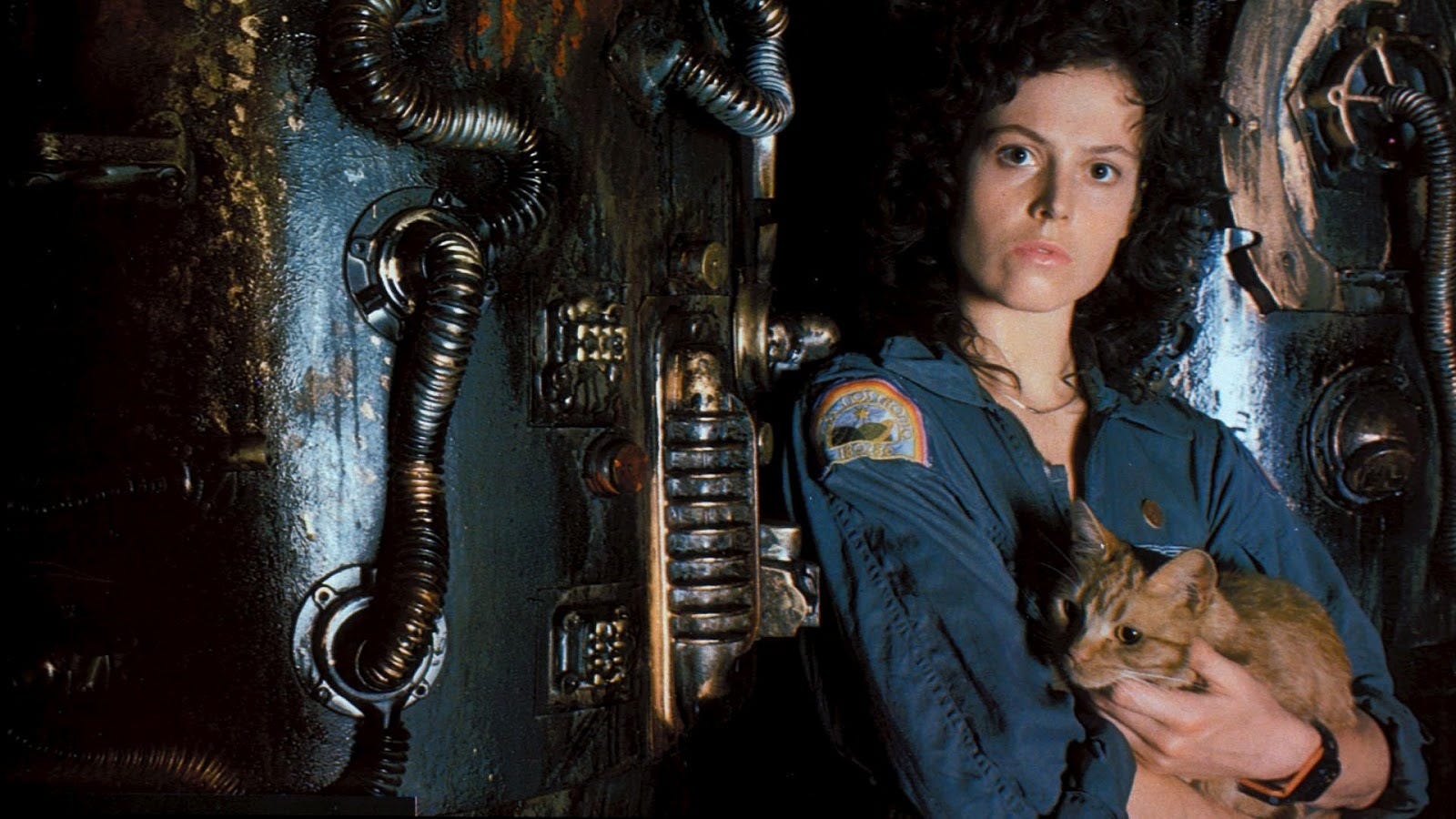
The Birds and the Ripleys
Ahead of Alien: Romulus, filmmakers Adrian Murray and Marcus Sullivan revisit the Alien franchise.
A: When was the first time you realized this whole thing was about sex?
M: I have a very distinct memory of listening to the Ridley Scott audio commentary on the Alien DVD when I was twelve, and he talks about how Ash forcing a rolled-up magazine down Ripley’s throat is him compensating for lacking a functioning penis. And he says something to the effect of “I hope there aren’t any kids listening to this, because I have to get a bit graphic here,” and I was so proud of myself for being a kid listening to it. That was the moment the rest of the metaphor clicked.
A: I didn’t understand that until embarrassingly late in my life, I always felt like it was just a really poorly thought out way to choke someone. I first watched it at nine, I think, and that sort of solidified some ideas about the movie that carried me through uncountable future rewatches. I had no conception of there being any sexual, motherhood, or rape themes. When I went through puberty and I did think, “you know, maybe there’s something about reproduction and sex here” ...but I thought I was just being gross.
M: I doubt I would have put it together without Ridley holding my hand. It’s fascinating how they just work as monster movies when you’re a kid. All the sexual implications can go right over your head and you’re still mesmerized.
A: Absolutely! I was so mesmerized by the mechanics and mystery of the ship and the aliens. I was rewatching like crazy trying to figure out how the computers worked, why the ships looked like that, what the Space Jockey could have been… it was purely from an engineering standpoint. This goes for all four of the films.
M: It’s funny you say “all four” because now there are nine! But everything after Sigourney Weaver taps out doesn’t count, somehow. I still think of those original four as the Alien movies, and the other ones as… I don’t know, spin-offs?
A: Yeah, they’re about the engineers and not about Sigourney Weaver trying to stop waking up and being hunted by aliens.
M: Not to jump right into shitting on Prometheus, which I actually like for the most part, but such it’s such a haunting idea in the original series that we don’t know what the derelict ship is, who the Space Jockey was, or why it’s carrying thousands of eggs. I have to actively block out those prequels when I watch the originals to preserve that childhood wonder.
A: Totally, the mystery was a reason I kept going back and watching as a kid! The whole thing was like finding some ancient truth, like an archaeological dig, finding Jesus’s tomb or whatever. Even the VHS I had felt like it had been unearthed, it was my discovery alone because nobody I knew at the time talked about or knew about Alien, oddly.
M: You can see the seeds of Prometheus in how you describe Alien, funnily enough. I think the lead characters in that are literally archaeologists. Maybe it’s just that the answers we get once they go digging just aren’t as compelling as the mystery.
A: No answer would be, I think. The fact that they were ancient weapons isn’t really interesting. The fact that The Company wants to use them for their weapons division, however, is interesting. Also, I was fascinated by the tone as a kid that first contact was basically seen as an inconvenience to the crew. They have to investigate not one, but two alien species—which the movie makes clear has never happened before. It’s literally a monumental moment for humans, but they are so overworked that they are complaining about the overtime. It was my introduction to workplace culture.
M: It reminds me of a tweet that went around a couple of years back. There was a big hearing in the States where the military basically admitted that there are legitimate UFOs, and the response was like, “great, aliens exist, I still have to go to work on Monday.” That’s been the big discovery for me rewatching them as an adult. The sex stuff I came to understand as a teenager, but the corporate elements really speak to me in my 30s. The idea of a corporation willing to risk the destruction of everything for a goddamn percentage (as Ripley puts it in Aliens) is so, so real.
A: Yeah, it’s such a world of physical exploitation. Bodies violated for sexual and financial gratification.
M: That’s a great encapsulation of the whole franchise, and I think it speaks to why the Alien vs. Predator movies never worked. The xenomorph isn’t really a comic book character you can crossover with other properties. It’s too heavy a concept.
A: Do you remember when we had to write spec scripts for some procedural in film school? I think it was for The Mentalist. Our teacher pointed out that you can never have sex crimes in these things, because that’s too messy and more disturbing than murder. Murder is family-friendly and a nice clean whodunit. Sex crimes aren’t primetime viewing.
M: Just speaking for myself, I will completely avoid a film or a show if I hear it involves too much of that. It’s too unsettling. And yet, through the distance that the sci-fi metaphor brings, I’m somehow able to explore those feelings through these movies. Like, I’d never watch a movie about a rapist stalking people, but I can watch a movie about a rapist alien stalking people on a spaceship. I don’t know what that means about me.
A: You know, I actually thought we’d be talking about some more “fun” stuff in this chat, but the thing is just too gross.
M: It’s really not a fun franchise at all. And I love that. It’s about these really upsetting truths of the human experience articulated through different styles from film to film. The strength of the original four is that it’s all grounded by Ripley’s arc. She’s taking on the emotional repercussions of all this trauma along with us, especially through the first three. I think the series has really struggled to find a meaningful human story since her story ended. There’s been a lot of Ripley clones throughout the further movies, but nothing approaching the depth that Sigourney brought.
A: Hey now, you said first three, but let’s not erase Alien: Resurrection!
M: I could never forget Resurrection. But she does literally die in Alien3, the Ripley of Resurrection is a clone and a different character altogether.
A: Well yes and no. I gotta say as a kid Resurrection was my most watched. And while yes, she is a clone, she also has some memories of her previous self, no? It’s such a horrific concept that the powers that be will literally pull her out of death to re-traumatize her again and again and again. Over Easter I was actually telling my mom the plot of Resurrection, on account of Jesus and all.
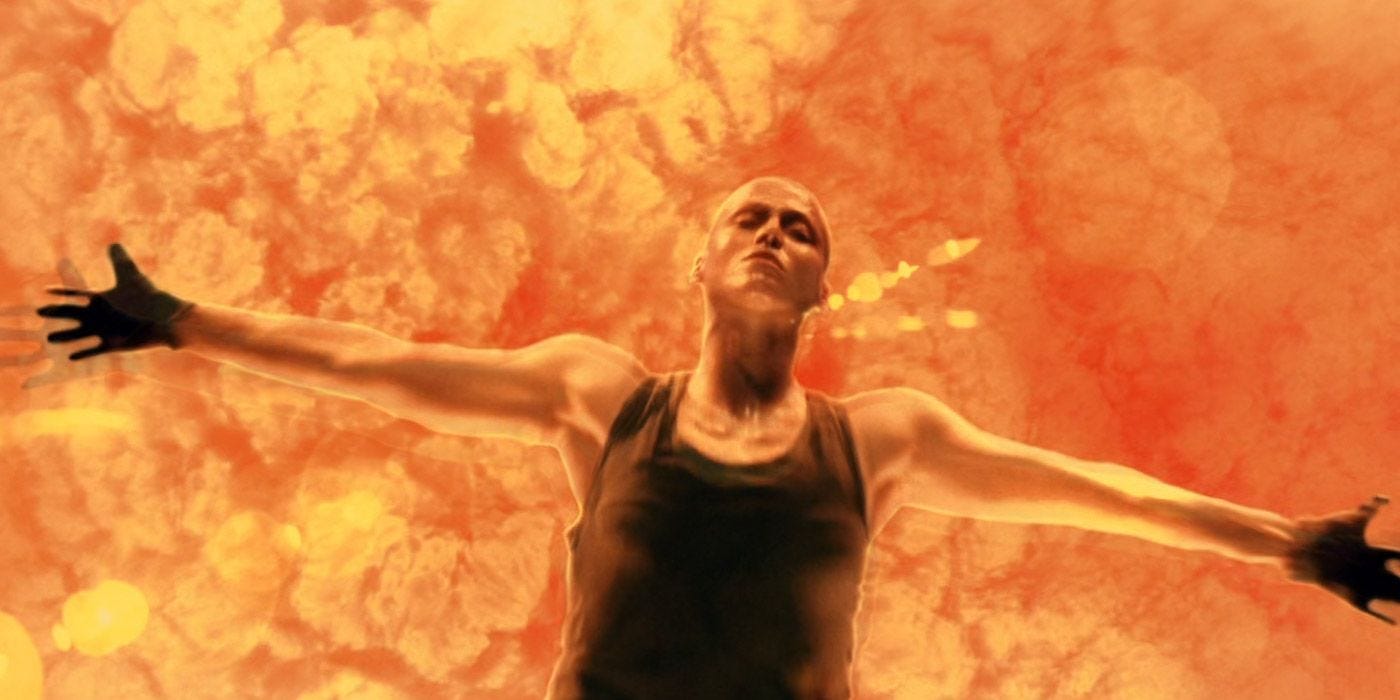
M: So… now I have to admit that I didn’t get the Jesus allegory until literally this past weekend, rewatching them. Ripley extends her arms out, Christ-like, as she sacrifices herself at the end of the third one. And then she’s resurrected and ascends to a kind of heaven by the end of the fourth (the last shot of the theatrical cut is of Earth as seen from the clouds). The original four fit together really beautifully.
A: Totally! Unevenness of the films aside, I think they all do a fantastic job of deepening the story through repetition, finding some new thematic material to draw on for each. Big Jim was sort of the master of that with Aliens and Terminator 2: Judgment Day, of finding a new dramatic and thematic setup for sequels. The newer ones feel more like content to me. Like a corpse being carted around for viewing by The Company.
M: Disney is very much our generation’s Weyland-Yutani. This is my big worry about Alien: Romulus. Other than it being another Alien sequel, the marketing doesn’t tell me much about what it’s actually bringing to the table. It looks like it faithfully recreates the aesthetics of the original (and of the Alien: Isolation video game, which is probably the best Alien installment since the ‘90s). Don’t get me wrong, it’s a beautiful vibe and I’m looking forward to going back into that world, but I miss the creative ethos of the original run, to reinvent it every time.
A: Absolutely. I mean, from a business perspective we know it’s often simply to keep the IP within the company. Like you said about Disney, I mean this is the company that rewrote public domain laws for Mickey Mouse and somehow trademarked traditional fairy tales. No matter how much I like Lilo & Stitch, the company is a zombie factory.
M: Incredible analogy, given that they debuted the new live-action CGI Lilo & Stitch just this past weekend.
A: I had no idea.
M: It's actually pretty cute.
A: No! Get it out of my head. GET IT OUT OF ME.
Adrian Murray is a filmmaker based out of Toronto.
Marcus Sullivan is a screenwriter and editor based out of Ottawa.
T.O. REP REC: CONTOURS presents La Belle Noiseuse (1991)
In the Mood’s monthly recommendation of what to see in Toronto’s repertory venues.
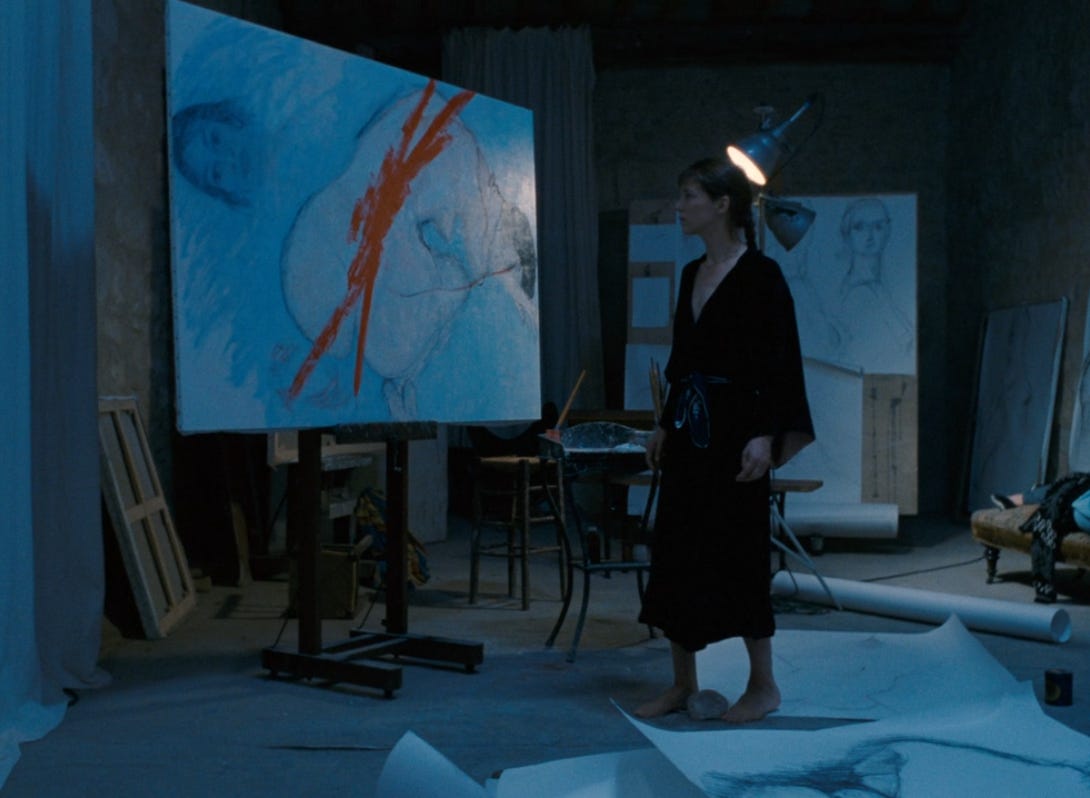
Watching a long film in theatres isn’t so uncommon, runtimes for run-of-the-mill Hollywood fare have crept up to lengths once reserved for historical epics. But watching a four-hour film in theatres—the runtime of La Belle Noiseuse, Jaques Rivette’s 1991 beguiling (and sexy) drama about a painter caught between his domestic life and his work—is still an impressive feat. One that programmer and critic Saffron Maeve invites you to undertake with a screening of Rivette's film (the long version, not the truncated one made for French TV) at The Paradise Theatre this Sunday, August 18th. The screening is the latest in her series CONTOURS, which presents films that engage with visual art and was conceived out of a desire to expand her work into new disciplines.
The selections and pairings feel fresh and thoughtful—a screening of Kurosawa’s epic Dreams paired beautifully with the experimental short Ikebana (Rita Ferrando)—and maintain a balance of accessible titles like William Wyler’s How to Steal a Million with more challenging or niche choices like Wild Style (Charlie Ahearn) which follows a graffiti artist in New York’s 1980s hip-hop scene.
La Belle Noiseuse is somewhere in between the two, slightly intimidating but deeply beloved. If you, like me, have had La Belle Noiseuse on a watchlist for years, a cinema is the best place for a long film with few distractions and the boost of audience camaraderie. And yes, there will be an intermission. We spoke with Saffron about CONTOURS, thinking outside the box, and programming for yourself.
Why did you start CONTOURS?
I had a moment last year where I’d begun to feel like a one-trick pony and wanted to pivot slightly from film criticism to visual art curation but lacked the formal background. I slowly realized that the proposals and research I had compiled were on transmediatic moving image projects, which could be categorized as either “experimental film” or “moving-image installations” depending on their locale. After observing how certain films reshaped my perception of certain artworks or movements, always for the better, I wanted to share that feeling with my friends and community.
So I developed a longlist (now 300+ works!) of films which ranged from filmed installations, documentaries and biopics of painters/sculptors, art heists, procedurals, and “painterly” cinema. I pitched the idea to Paradise, who were very receptive, with the small caveat that I wasn’t sure if the series would have a particular “style” because I wanted as varied a slate of films as possible.
How do you pick your films?
Selfishly—they’re usually films I’ve been dying to see on the big screen, like Dreams or Lust for Life. Our August screening of La Belle Noiseuse is the only film I programmed thus far which I’ve not previously seen, only because I wanted to experience it in a theatrical setting for the first time. I do try to avoid patterns in art movements, genres, and regions (though they happen anyway) so that audiences aren’t engaging with a singular artistic canon. I also pick a short film as a little aperitif, which is my favourite part, either to underline or challenge some of the ideas at play in the feature.
What’s a favourite memory from one of your screenings?
After we showed Downtown 81 in December, a friend told me they couldn’t look at Basquiat’s artwork in the same way because the film engendered a playfulness they hadn’t previously associated with the artist—they said there was something about seeing Basquiat laughing and pulling out trumpets in the street that seemed to add to the complex joys of his work, which I found very touching. Seeing people come to CONTOURS on dates also makes my heart swell.
How would you define Toronto’s rep film world? What are some ways you think it has changed in the last few years/what are changes you hope to see?
I think, especially now, it’s a robust scene of creatives who are working against institutions and corporate interests to share in cinema—it’s vital work! The amount of microcinemas or unorthodox screening practices which are cropping up around the city in response to organizations shuttering or scaling back is also very heartening. In the coming years, I hope to see more film and arts workers unions and further avenues for experimental film screenings.
La Belle Noiseuse screens on August 18th, 5pm at The Paradise Theatre. Get tickets here—and you can enter to win tickets to the screening here!
Follow CONTOURS on Instagram 🎥
Submissions OPEN for Issue 11: PERIOD PIECE

We’re accepting submissions for Issue 11: PERIOD PIECE until August 31st. Check out our submission guidelines here:

In the mood for something more?
Dive into the juicy archives of our newsletter and our online magazine.

Wondering what to watch?
Choose a mood on our Film Recommendation Generator and get a curated pick from writers, filmmakers, and poets.

Support us!
If you’d like to donate to our mag, here’s our PayPal! We’re volunteer-run, and donations go directly to our contributor honorariums and operating costs.