
Notes on the cast of The Odyssey 🌊
Our team and contributors each take on one performance from Christopher Nolan's epic, and our Editor-in-Chief introduces MARNIE for Battle of the Sexes on July 30th

BATTLE OF THE SEXES presents: MARNIE
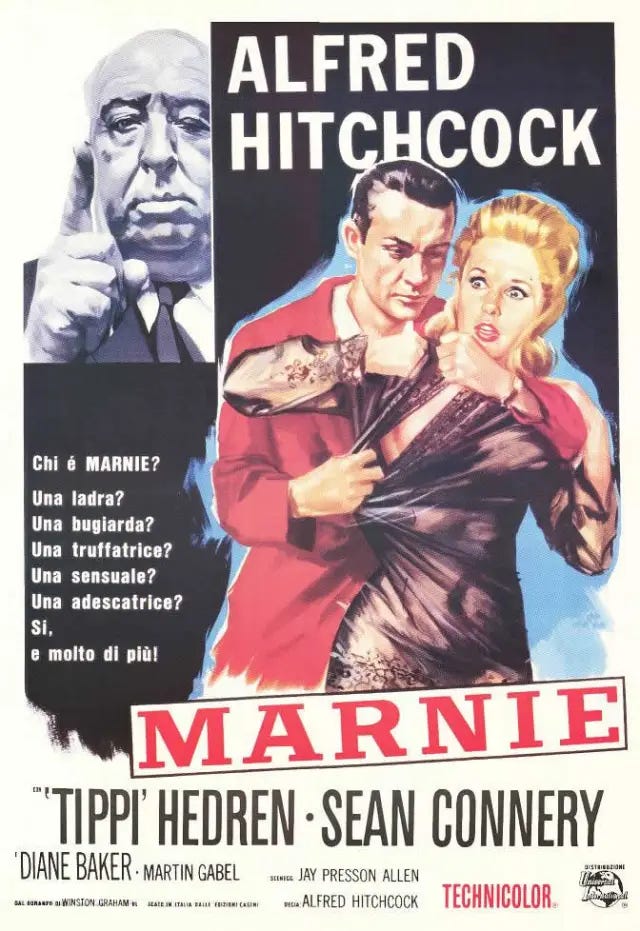
Introduced by our Editor-in-Chief, Gabrielle Marceau
Thursday, July 30th at 6:30 PM
Fox Theatre, 2236 Queen St. E, Toronto
Battle of the Sexes is a series featuring films directed by women about men and films directed by men about women.
“Marnie is Alfred Hitchcock’s darkest and most revealing film, featuring a haunting performance by Tippi Hedren, one of the last of her career. A devastating study of control and trauma, Marnie is also a film that tells us more about its director than its subject: Hitchcock’s real-life romantic fixation on Hedren seeps unnervingly into every frame.’
And use the code InTheMood4Battle for a discount!
Notes on the cast of The Odyssey 🌊
For our coverage of Christopher Nolan’s The Odyssey, In The Mood Magazine’s team and contributors each take on one performance from the year’s most absurdly stacked cast. At least until Dune 3 comes out.
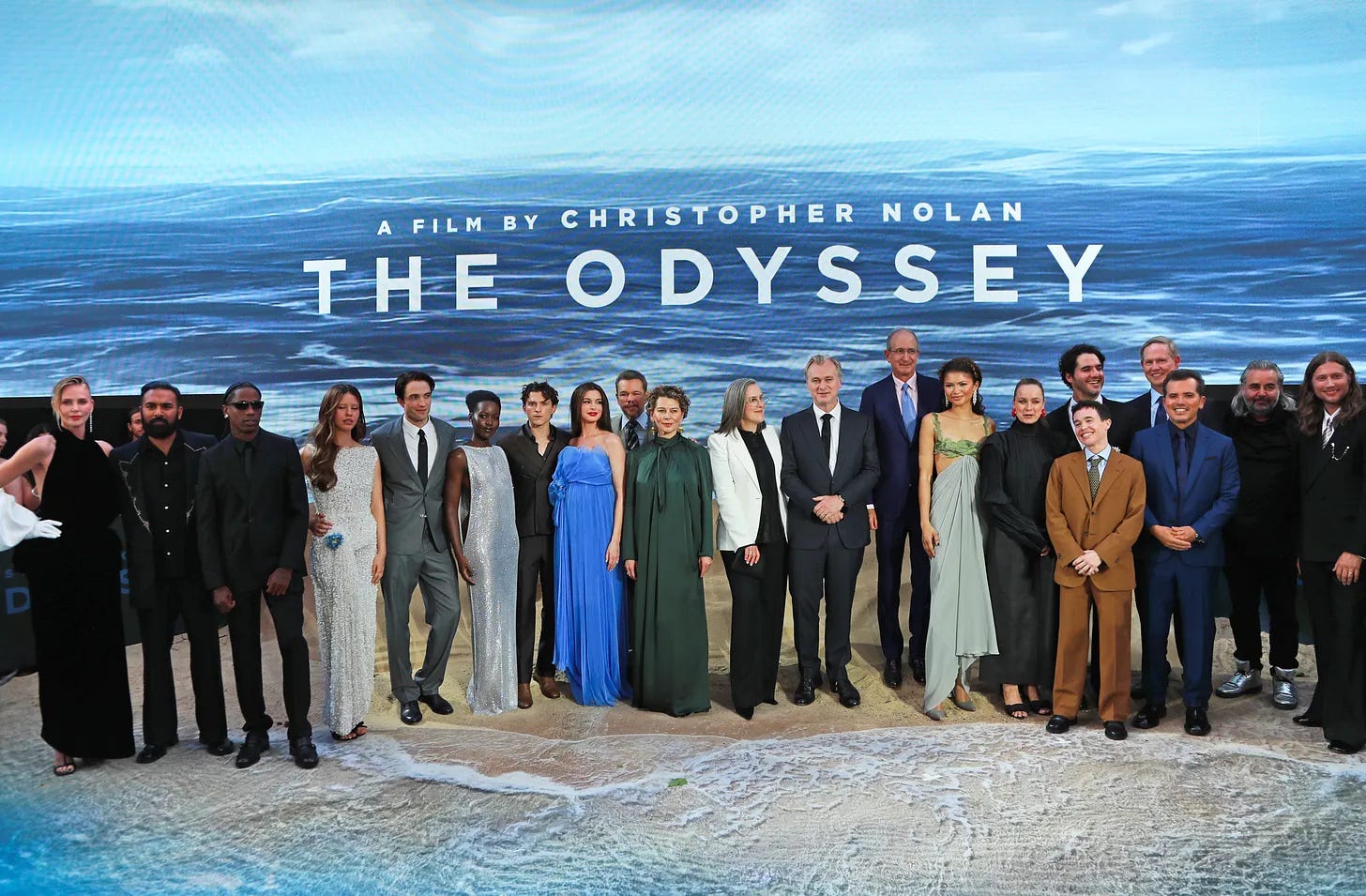
Charlize Theron as Calypso
When I was thirteen, I brought my hairdresser a folded-up picture of Charlize Theron’s A-line bob in Æon Flux, a haircut I had for the next decade. That same year, my childhood friend and I bought dog tag necklaces from an ALDO Fights AIDS charity initiative, solely because Charlize was in the promotional photos.
In The Odyssey, Charlize plays Calypso, who keeps Odysseus unknowingly captive on her island for seven years, feeding him lotus flowers that fog his memory. Her beach tent home setup resembles an Anthropologie pop-up store (derogatory), her flimsy fishnet dress Shein (complimentary, regrettably). She’s wifey, she’s mistress, she’s mommy, she’s crazy, she promises him immortality if he stays. She says it’s because she’s in love with him, but sounds far too blasé, “no worries if not.”
Yearning for his wife and son and men who worship him, Odysseus ultimately decides to leave for home, leave Calypso behind. What would I do in this situation? It would be a dream to have Charlize catch fish for me. We’d swim and look for seashells together, and she could cut my sun-and-salt-kissed hair back into a bob, a more practical style for our never-ending beach time.
Then again, immortality has always been my nightmare. But maybe like Calypso, I wouldn’t care—enough lotus flower petals on hand to make me forget, forever.
—Sennah Yee, Managing Editor
Jon Bernthal as Menelaus
According to Letterboxd I’ve only seen 6% of Jon Bernthal’s movies, and as someone who never watched The Walking Dead I can’t be sure I’ve seen him much on TV either. A friend asked me at what point does he say “Let me tell you something” in The Odyssey. I’m in on the joke because I know that’s what he says, I’ve just never heard him say it. But here’s what he does tell you: He tells you to come in and sit the fuck down. He tells you to enjoy the celebrations, even though he doesn’t seem to be enjoying anything. He tells you he knows who you are, despite the fact that you haven’t ever met. He tells you some war stories about your father. He tells you his wife used to be 50% hotter. He gets really upset and tells his wife that he’s definitely not going to tell you anything about what happened to Agamemnon at the hands of his crazy sister-in-law.
Jon Bernthal’s one non-helmetted sequence, where he monologues to Tom Holland’s Telemachus, flashed me back to family gatherings I was taken to as a pre-teen, filled with stories about and from my older, cooler cousins with bold haircuts. World travellers, far beyond the bounds of my grade school. Walking into a gathering where everyone has known me forever, from before I could know anyone or anything. Legends re-told about something someone did, something I might have done. Inside jokes I find myself accidentally a part of, or possibly the butt of. It’s hard to tell. Like Telemachus, I found it best to stay quiet and listen, because I don’t want word to spread that I might not be who they think I am. What they know about me is not what I know about myself, and when they tell fun stories about my parents I can’t tell them that there’s no way the people they’re talking about are the same ones that I live with.
But there’s always truth to legends and lies. When Penelope is told of Agamemnon sacrificing his daughter to appease the Gods, she wonders why the Gods would want a child. Odysseus replies that “the power of a sacrifice is in the cost to the person making it.” In that vein, I’d add that the truth of a story is not in its accuracy, but in what it reveals about the teller. So let me tell you something.
—Adrian Murray, Contributor
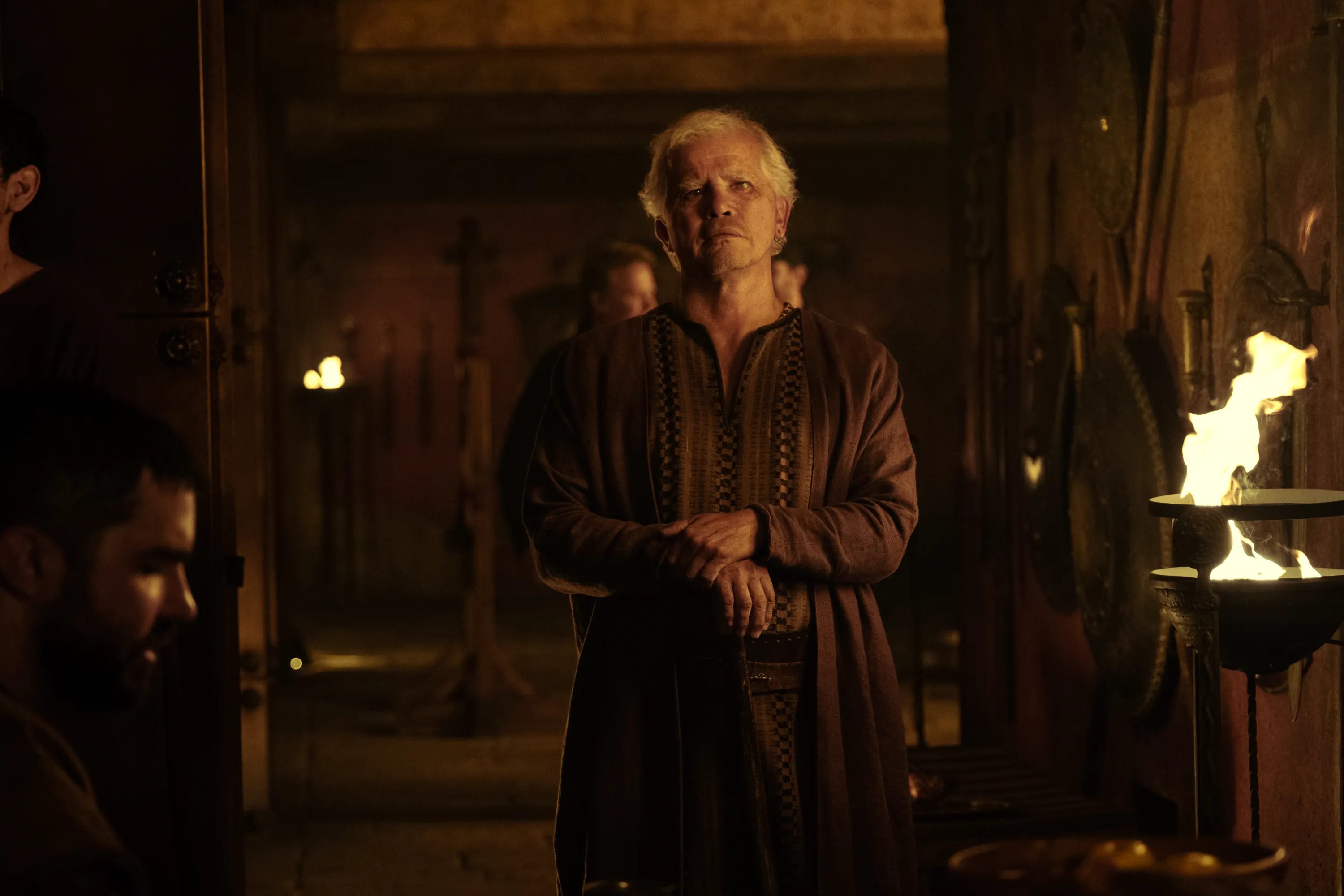
John Leguizamo as Eumaeus
I remember properly learning Leguizamo’s name one day, I think from an Epic Rap Battle of History, when I was twelve. I already knew him, of course, as a silly smelly sloth. His presence thereafter in a film is always a welcome surprise—one that still makes me nostalgic, like seeing an old friend after a long absence.
His voice is usually a dead giveaway, but his rasp here settles into a different register. Weathered and weary in his waiting, I squint to bring him forward, to hear him the same. I doubt myself upon first sight. A fleeting moment, I feel unsure, though I know who I’ve just seen. Faux cataracts render him blind, his hair bleached for hours until his skin starts to burn. He doesn’t believe in wigs. I don’t tend to put my faith in false hair either—perhaps we are the same.
Where does the line between Eumaeus and Eumaeus end? The body doesn’t know the difference, he says. Method; I wonder what memories he draws upon to become this loyal doulos. I wonder if Eumaeus would be a Knicks fan too.
He’s a chameleon but not to me. I always see him because I always search. His birthday is today; Happy Birthday, John.
—cynthia cepeda, Assistant Editor
Robert Pattinson as Antinous
In modern terms, Antinous occupies the unique intersection between pathetic male manipulator and the sort of roommate who leaves piles of dishes in the sink, and then starts a GoFundMe to escape their abusive roommate situation when asked to wash said pile of dishes. Portrayed by Robert Pattinson, Antinous is one of scads of stinky, sweaty suitors eating Queen Penelope (Anne Hathaway) out of house and home as they desperately vie for her hand in marriage (well, for her throne). The suitors lawfully occupy Penelope’s palace on a technicality—imagine if you weren’t allowed to set out traps for the mice in your apartment, in case they might be Greek Gods in earthly form—and Pattinson, oozing with sleaze and sliminess, might make you feel bad for a landlord for the first time in your life.
While The Batman and Dune fanboys might try to convince you that this will be Pattinson’s Best Supporting Actor Oscar-nominated turn, he is frankly not even the best supporting actor in The Odyssey. Not that Pattinson seems to care at all—and it’s actually for the best. He takes what is really a one-dimensional, moustache-twirling villain role on paper, and hams it up into a delightfully gripping screen presence—gripping as in you want to reach through the screen and grip his throat. And then throttle him (perhaps this is offered with a 4DX ticket?).
Pattinson cites James Woods’ character in Casino as inspiration, but he also brings to mind another of Woods’ performances—Hades, in Disney’s Hercules. Slimy. Sort of pathetic. Short temper. Love to hate him. Greek. Flirts with the female lead but could also be somewhat of a sassy gay man (Pattinson wished for Antinous to wear sparkly leopard fur underpants under his skirt). I wished for that too.
—Chloë Gordon, Contributor
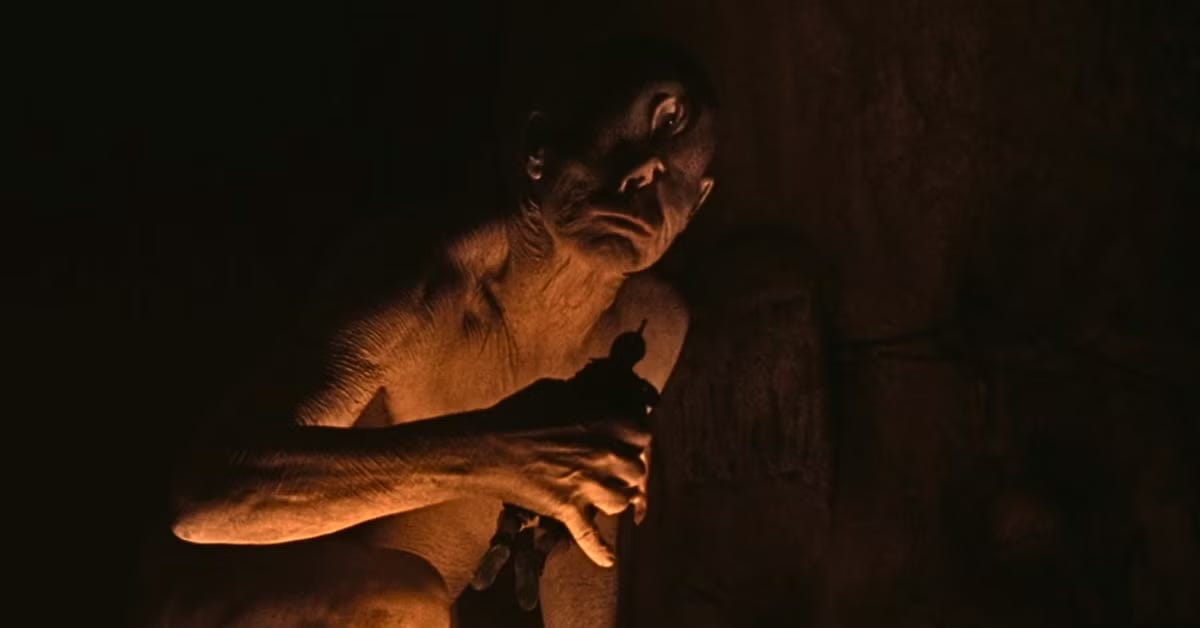
Bill Irwin as Cyclops
Bill Irwin can be considered something like the epitome of the American artist. Not just an actor of the screen and stage, but also a choreographer and clown, his career would point to something akin to the quintessential *performer*. He makes sense as a regular collaborator of the late Jonathan Demme, an actor’s director, but maybe not of the typically cold Christopher Nolan.
Irwin and Nolan’s first collaboration was 2014’s Interstellar, which, while considered somewhat of a miss during its initial release, has since become the director’s favourite film, and in fact is the most popular movie in the history of Letterboxd. What’s an element that gave Interstellar a little extra likeability? Likely the comic relief robot TARS, voiced, and in fact, puppeteered by Irwin. Yes, Irwin’s work wasn’t just ad-libbing in a Burbank recording studio, but operating the robot even when they were shooting scenes in the roughest waters of Iceland.
Irwin returns to the Nolan fold with The Odyssey, depicting one of the story’s most iconic figures, the cyclops Polyphemus. Depicted via a giant puppet voiced and operated by Irwin, the character is, in its brief runtime, one of the most endearing figures of the film. The pitiful wail the creature lets out when stabbed in the eye? Thank not just the sound mixers, but Irwin’s committed performance.
—Ethan Vestby, Contributor
Zendaya as Athena
There’s a thunderstorm outside. A rumble. A quiet. Who doesn’t understand thunder? Or fire? Who doesn’t understand pain? Zeus’ law, they say. Why can’t gods speak in ways we understand? A rumble. A quiet. Look at me, she says. Look at me.
Despite dominating The Odyssey’s press tour with her admittedly divine fashion sense, Zendaya’s Athena appears on screen for only a few moments. And yet, the weight of her presence haunts the film and lingers in Odysseus’ peripherals from start to finish. In every fleeting visage, she is the temple, the fire, the longing, the fear. She is his betrayal, his shame, his promise. She is perfect (so Christopher Nolan says).
Looking wistfully over Odysseus, her gaze feels heavy, willing him to face her, face himself. Brows drawn, lips slant. A potent and obvious image of disappointment to rival the comically powerful frowns of even one Florence Pugh. She is a phantom, billowing in the wind, her linens pulled over her taut frame. Statuesque.
She is a goddess, a stranger. A Trojan priestess begging for mercy. Who doesn’t understand pain? Or blood?
Look at me, she says. Perfect, he says.
—Farozaan Raza, Intern
Travis Scott as The Bard
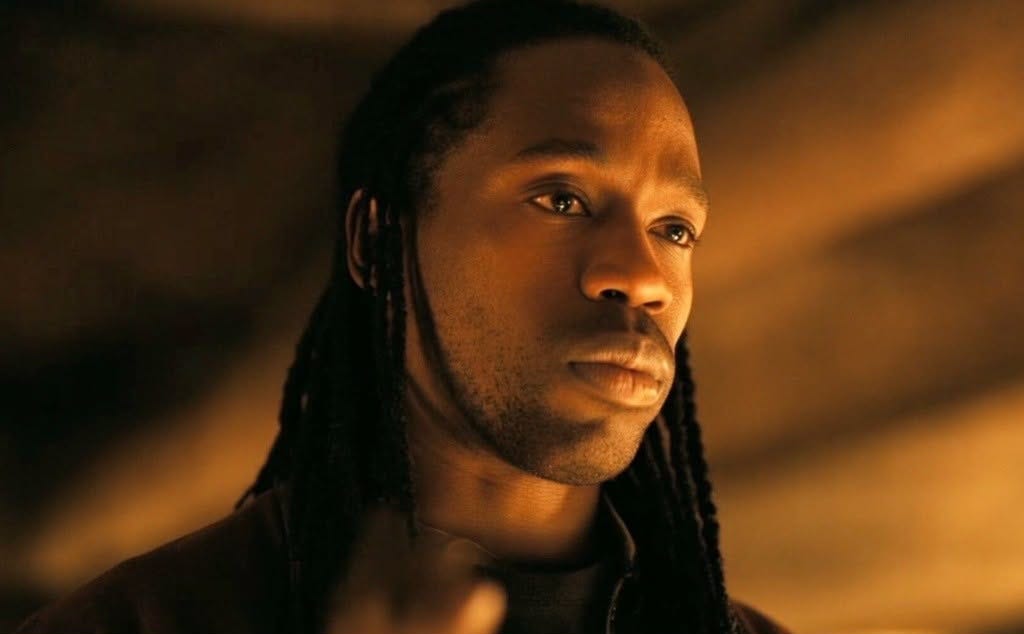
In a portion of Homer’s The Odyssey that is excluded from Nolan’s The Odyssey, Odysseus encounters a blind bard named Demodocus who brings him to tears while singing the story of the fall of Troy; think of it as an in-narrative version of a “last time on…” recap. Many historians believe that Demodocus was Homer’s way of putting himself within the story; a representation of the oral tradition that carried the story through generations. While that chapter as a whole didn’t make it into the film’s script, the character of Demodocus did. In fact, he’s the first character you see and the last one you hear before all is said and done. That’s some prime real estate, and with a director like Christopher Nolan who any actor still breathing would clear their schedule for, it might surprise some that he landed on giving it to Travis Scott.
As Nolan says in an interview with Time, “I cast [Scott] because I wanted to nod towards the idea that this story has been handed down as oral poetry, which is analogous to rap.” While one of my friends critiqued this approach as “the whitest thing I’ve ever heard”, I can’t deny that Scott portrays this Homer stand-in with the gravitas worthy of a Coachella headliner. It’s clear honouring the oral tradition was important to Nolan, but so too was finding ways to root this story in the present. A stodgy fellow with a lute was never going to be the way he opened his biggest film yet. He needed a blockbuster performance, and so he got a blockbusting performer.
—Anders Gatten, Contributor
Elliot Page as Sinon
Elliot Page dies first. With a javelin through his chest, pinned against a hollow metal horse, Sinon (Page) is sacrificed so that the Greeks’ plan can unfold. Sinon doesn’t know his fellow soldiers are stuffed inside the horse, listening to him die. He doesn’t know about Odysseus’ plan. He doesn’t live to see the fallout of Troy, the metaphysical anguish that is unleashed when the city falls.
Of course, none of this is in the original epic. Christopher Nolan has plucked Sinon from Virgil’s Aeneid, the foundational myth of the Roman Empire, and transformed the character into a cypher for a modern Odysseus, one that talks like he’s from Boston. The original Sinon schemed and betrayed the Trojans. The original Sinon was Odysseus’ cousin; in Nolan’s Odyssey, Sinon is a shepherd’s boy, sent in his master’s place to die in a war with no end.
Movies are sympathy-generating machines. When Sinon crawls out from Hades’ mud and growls at Odysseus for deceiving him about the Trojan Horse’s true nature, the audience is meant to feel a sense of injustice. In the end, Sinon is a lazy but effective stand, a fate legible to the modern viewer as unfair and tragic.
—Katia Lo Innes, Contributor
Matt Damon as Odysseus
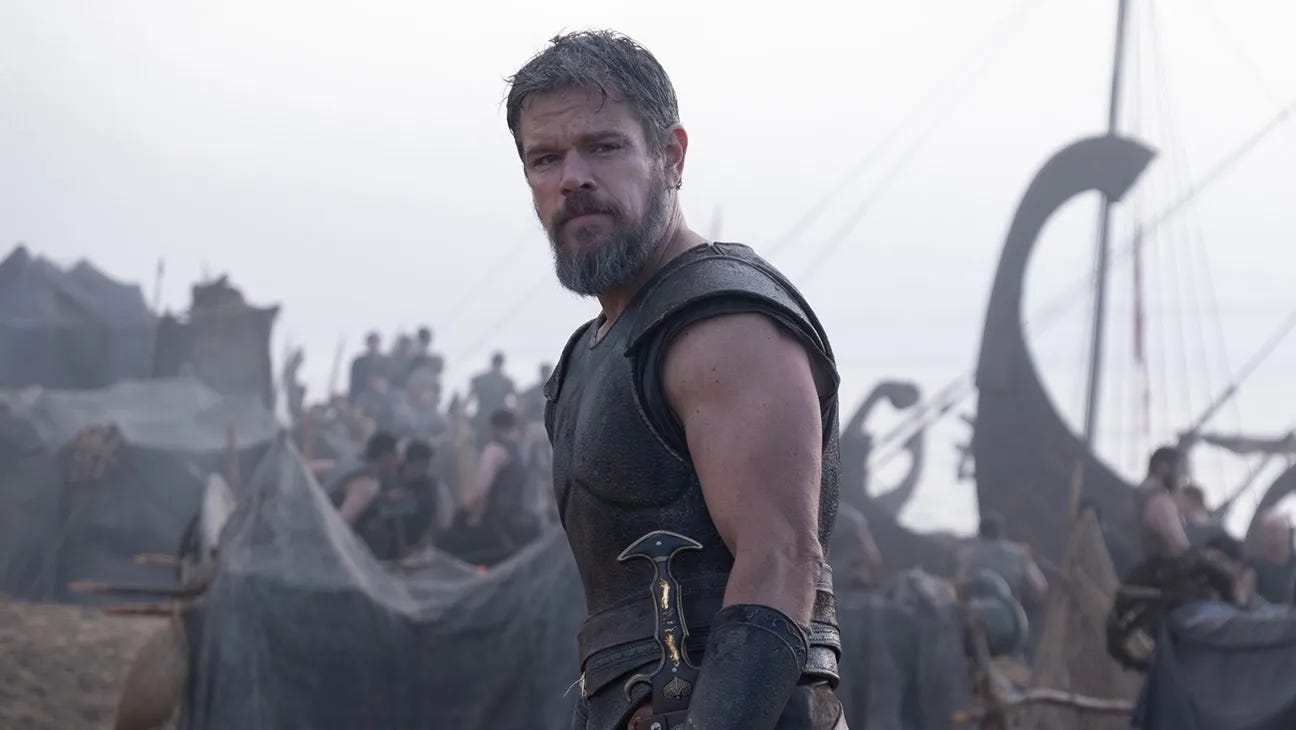
There are two films starring Matt Damon out this year, one being a Netflix action film called The Rip—which I’m only really aware of because my boyfriend put it on during a slow workday—and, of course, The Odyssey. A few years ago, if you had asked me if Damon was starring in a low-rent, slightly reactionary streaming movie, or the most celebrated film of the year, I might have said the former. I mean, would Damon have been at the top of the list if he wasn’t in Nolan’s stable of players? (Loyalty is a quality the men share, the other star of The Rip: Ben Affleck.)
One of the most important films of my young life was The Talented Mr. Ripley, because my mom would not let me see it (too nihilistic, she said; it seemed chic to me). When I finally did, I was surprised that Damon (broish, kind of a normie) was so disquieting and beautiful. I also loved him as Jason Bourne, where that same normie-ness made him a compelling surveillance-state foil. But he lost me at The Martian, where he seemed kind of smarmy and suburban: too much, I thought at the time, like a dad.
He’s certainly the dad in The Odyssey (when he catches his men eating a literal sacred cow, he does not seem devastated, just disappointed). He’s also a hero, and also frustrated and ashamed by what that means: responsibility, hubris, the weight of history. The worst part of the heroic stories told about him is that they are true. It’s a performance both in line with the epic bleakness of the material and Nolan’s sensibilities, and with his own star persona: reliable, confident, a normie who is also a star.
When I came across a clip of Damon wearing an ill-fitting chainmail hood and polyester cape on the YouTube show, Brittany Broski’s Royal Court (one among the many stops in the celebrity humiliation ritual of the modern press tour), I was surprised to see how good-natured he was about the whole thing. Then I remembered he has four daughters and has probably been subjected to a lot of dress-up. His role as a girl dad might be why he was so pleased to talk about his body double for the Laestrygonians sequence in the film: an absolutely jacked, 4ft5 female stunt performer named Devyn Dalton, who he describes as having “the best arms I’ve ever seen.”
—Gabrielle Marceau, Editor-in-Chief

In the mood for something more?
Dive into the juicy archives of our newsletter and our online magazine.

Wondering what to watch?
Choose a mood on our Film Recommendation Generator and get a curated pick from writers, filmmakers, and poets.
leguizamo was my MVP (Most Valuable Pig Farmer) but i admit that fishnet dress was sickening